
Hiking Essentials: The Day Hike Checklist for Australian Trails
Published 26 October 2026
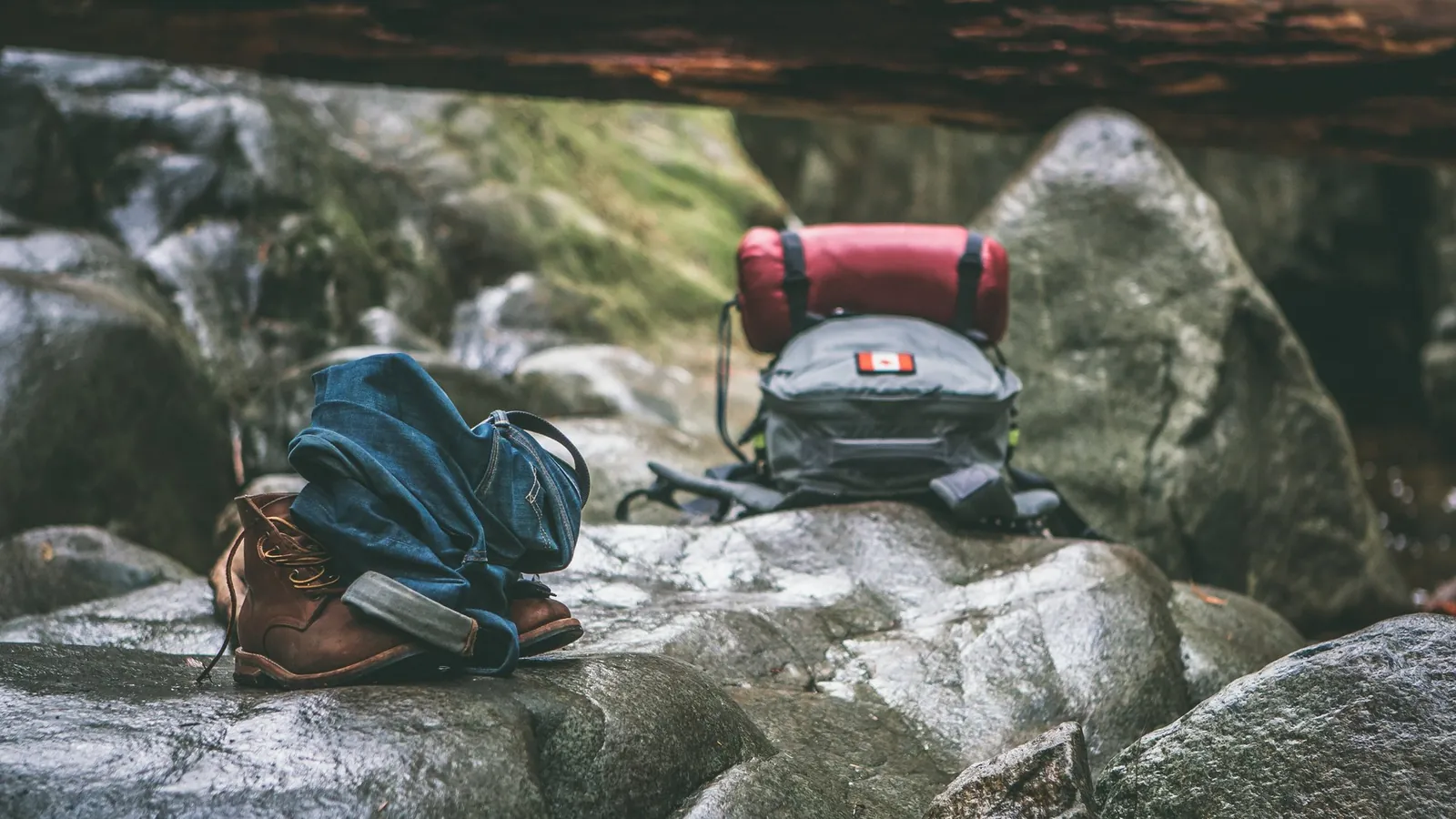
Photo: Andrew Ly nineteen, CC0, via Wikimedia Commons.
The hiking essentials for an Australian day hike are simple: water, sun protection, sturdy shoes, a warm or waterproof layer, food, a first aid kit, a charged phone with an emergency app, and a map. Add a torch and a personal locator beacon (PLB) for longer or remote walks.
This checklist is built from the official safety advice of NSW National Parks and Queensland Parks and Wildlife Service (QPWS), checked in October 2026. Adjust it for the length, remoteness and weather of your walk.
The quick hiking checklist
| Category | Short walk (under 2 hrs, popular track) | Half or full day | Remote or long walk |
|---|---|---|---|
| Water | ✔ 1–2 L | ✔ at least 2 L per person (NSW National Parks) | ✔ 2 L+ and a way to treat water |
| Sun: hat, sunscreen, sunnies | ✔ | ✔ | ✔ |
| Insect repellent | ✔ | ✔ | ✔ |
| Sturdy shoes (no thongs) | ✔ | ✔ | ✔ ankle support |
| Warm and waterproof layers | Optional | ✔ | ✔ |
| Food and snacks | Snack | ✔ plus extra | ✔ plus extra |
| Rubbish bag | ✔ | ✔ | ✔ |
| Charged phone and Emergency Plus app | ✔ | ✔ | ✔ |
| First aid kit | Small | ✔ | ✔ with snake bandages |
| Map (paper or offline) | Optional | ✔ | ✔ topographic map and compass |
| Torch | — | ✔ | ✔ |
| Personal locator beacon (PLB) | — | Consider | ✔ |
| Trip plan left with someone | ✔ | ✔ | ✔ written itinerary |
What to wear on a hike
NSW National Parks recommends:
- Bright clothing, so you're easy to spot.
- Waterproof and windproof layers. In Queensland, QPWS advises carrying warm clothing, even on day walks.
- Comfortable, enclosed shoes. Thongs aren't suitable. On steep or rocky tracks, like the concrete climb up Mt Beerburrum in the Glass House Mountains, QPWS recommends ankle-supporting shoes with good grip.
- A hat, sunscreen and insect repellent.
Local tip: South-east Queensland's mountain parks, like Lamington and Springbrook, can be cloudy and cool even when the coast is sunny. QPWS notes that Springbrook's lookouts are "often shrouded by cloud, even when the weather is fine and sunny on the coast". Pack a layer.
What to bring on a hike
Water and food
NSW National Parks recommends carrying at least 2 litres of water per person. Take more in hot weather or on exposed rock. On the Glass House Mountains' Yul-yan-man track, QPWS warns that "exposed rock surfaces radiate significant heat". QPWS also advises carrying extra food and water in case your walk takes longer than planned.
Pack energy-dense snacks like nuts, fruit, wraps or muesli bars, and bring a rubbish bag, because you need to carry everything out.
Navigation
- A map. Download park maps before you go. Many QPWS parks publish track maps as PDFs. NSW National Parks recommends a topographic map and compass for bushwalks.
- The NSW National Parks app for NSW parks.
- Your phone's offline maps. Signal often drops in valleys.
Safety and emergency
- A first aid kit. At minimum, include plasters, blister care, a compression or snake bandage, any personal medication, and antihistamines if you have allergies.
- A charged phone with the Emergency Plus app, which helps you call Triple Zero (000) and share your location. QPWS reminds walkers that no mobile coverage means no call.
- A personal locator beacon (PLB) for remote areas. NSW National Parks recommends one if you're heading somewhere remote.
- A torch or headlamp, in case you're out later than planned.
- Matches or a lighter, which NSW National Parks lists for bushwalks.
Nice to have
- A small sit-pad or towel.
- Spare socks.
- Walking poles for steep descents.
- A whistle.
- A power bank.
- Toilet paper and a trowel. If there's no toilet, QPWS says to bury waste at least 15 cm deep (50 cm in sand), away from tracks and water.
Day hike packing list (printable)
Copy this into your notes app and tick it off before you leave:
- [ ] Water (2 L+ per person)
- [ ] Snacks and lunch, plus extra
- [ ] Hat, sunglasses, sunscreen
- [ ] Insect repellent
- [ ] Warm layer and rain jacket
- [ ] Sturdy, broken-in shoes
- [ ] First aid kit (including a compression bandage)
- [ ] Charged phone, Emergency Plus app, power bank
- [ ] Map: downloaded or paper
- [ ] Torch or headlamp
- [ ] Rubbish bag
- [ ] PLB (remote walks)
- [ ] Trip plan left with a friend
- [ ] Park alerts and weather checked
Before you leave: three checks
- Park alerts. Tracks close for storms, fire, maintenance and landslips. Check QPWS park alerts or NSW National Parks alerts.
- Weather. Check the Bureau of Meteorology forecast and fire danger. QPWS says not to start the Yul-yan-man track if rain is predicted, you can see a fire, or the weather is extremely hot. That's good advice for any exposed walk.
- Tell someone. Share where you're going and when you'll be back. NSW National Parks recommends walking in groups of three or more. For remote walks, QPWS says never to walk alone and to leave an itinerary.
Adjusting your kit for the season
Summer (December–February): Heat and afternoon storms are the main risks in south-east Queensland and northern NSW. Start early, carry extra water, wear a wide-brimmed hat, and be off exposed summits before storms build. Leeches and ticks are more common in wet rainforest, so repellent and long socks help.
Autumn and spring: These are often the most comfortable hiking months. Mornings can still be cool in the ranges, so a light layer is worth carrying.
Winter (June–August): Days are short. Pack a torch, start earlier and allow for cooler, windier conditions on plateaus like Lamington, Springbrook and Dorrigo. Carry a warm top even if it's mild when you leave the car.
After heavy rain: Waterfalls are at their best, but tracks, rock and creek crossings get slippery. Never cross flooded creeks, and check park alerts for closures.
Common packing mistakes
- Not enough water. It's the most common problem on hot days.
- New shoes. Break them in on short walks first.
- No layer. Even a light rain jacket helps if you get stuck in a storm.
- Phone at 30%. GPS and photos drain batteries fast.
- Relying on mobile signal. Download maps and tell someone your plans.
Put your checklist to work
Packed and ready? Active Quests turns walking tracks across Queensland into GPS check-in quests. Pick a trail, walk it and check in at the finish to earn ACTIVE Coins. Try a short starter like the Mt Coot-tha Summit Track or the Tibrogargan circuit, or browse all quests.
Related guides
- 12 Best Hikes Near Brisbane, from Easy to Epic (2026)
- Gold Coast Hikes: 12 Best Walks, Coast to Hinterland
- Sunshine Coast Hikes: 12 Best Walks, Noosa to Glass House
- Gold Coast Waterfall Walks
Frequently asked questions
What are the essentials for hiking?
For a day hike: water (at least 2 L per person), sun protection, insect repellent, sturdy shoes, a warm or waterproof layer, food, a first aid kit, a charged phone with the Emergency Plus app, a map and a torch. Add a PLB for remote walks.
How much water should I bring on a day hike?
NSW National Parks recommends at least 2 litres per person. Take more in heat, on exposed tracks or on longer walks.
Do I need a personal locator beacon for a day hike?
For short walks on popular tracks, a charged phone and a trip plan are usually enough. For remote areas, NSW National Parks recommends carrying a PLB.
What should I wear hiking in Queensland?
Lightweight, bright clothing, a hat, sunscreen, comfortable enclosed shoes with good grip, and a warm or waterproof layer. Mountain parks can be much cooler and wetter than the coast.
What is the Emergency Plus app?
It's an Australian emergency app that helps you call Triple Zero (000) and shows your location so you can tell emergency services where you are. It still needs mobile coverage to make a call.
Should I tell someone before I go hiking?
Yes. Always tell someone where you're going and when you expect to be back. For remote walks, QPWS recommends leaving a written itinerary.
Ready, set, walk
Pack the essentials, check the alerts and pick your trail. Active Quests is on the App Store when you're ready to start collecting check-ins.