
Japanese Walking: How the 3-Minute Interval Walking Method Works
Published 30 October 2026
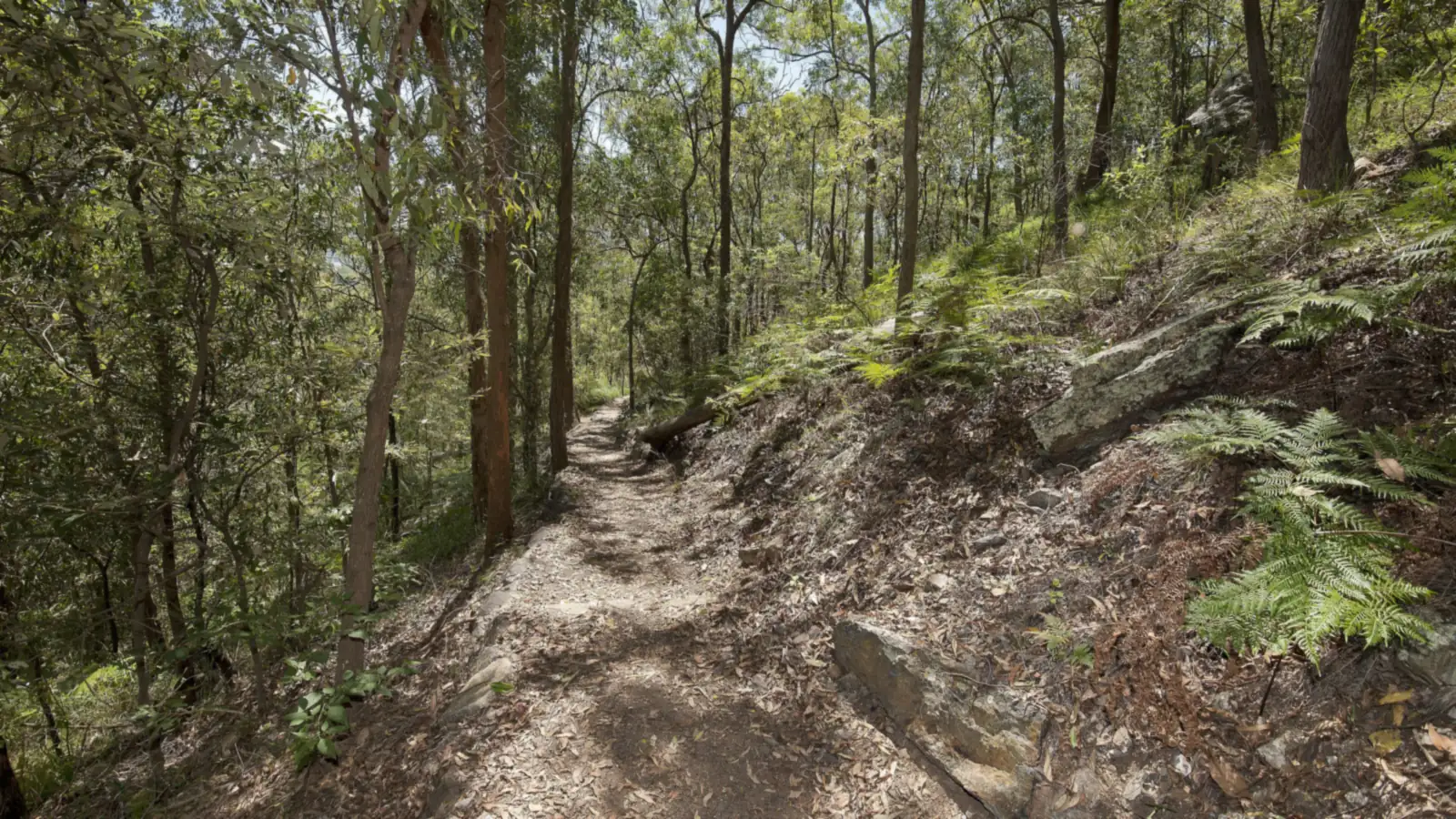
Photo: Mt Gravatt Outlook walking track, Brisbane, by Lyle Radford, CC BY 2.0, via Wikimedia Commons. Cropped to fit.
"Japanese walking" is the popular name for interval walking training (IWT), a simple routine studied by researchers at Shinshu University in Matsumoto, Japan. You alternate 3 minutes of fast walking with 3 minutes of slow walking, for at least five rounds. That's about 30 minutes, at least four days a week. There's no gym, no running and no equipment. This guide explains what the research actually found, how to do it safely, and where to try it in South East Queensland.
Quick answer: what is Japanese walking?
- The pattern: 3 minutes of slow walking, then 3 minutes of fast walking, repeated at least 5 times (about 30 minutes).
- How often: at least 4 days a week in the studies.
- How hard: in the original trial, the fast intervals were above 70% of each person's peak aerobic capacity for walking and the slow intervals were about 40%.
- What the trial found: after 5 months, interval walkers improved thigh strength and aerobic fitness more than people who walked steadily at a moderate pace, and their resting systolic blood pressure dropped more.
- Who it suits: most people who can already walk comfortably for 30 minutes. Check with your GP first if you have a heart condition or other health concerns.
Where Japanese walking comes from
The method comes from a research group in the Department of Sports Medical Sciences at Shinshu University Graduate School of Medicine, including Professor Hiroshi Nose. Their best-known trial was published in Mayo Clinic Proceedings in 2007 (Nemoto et al., 2007).
The researchers randomly split 246 people (60 men and 186 women, average age 63) into three groups for 5 months:
| Group | What they did |
|---|---|
| No walking training | Carried on as normal |
| Moderate continuous walking | Walked at about 50% of peak aerobic capacity for walking, aiming for 8,000 steps or more a day on at least 4 days a week |
| Interval walking (Japanese walking) | At least 5 sets of 3 minutes slow walking (40% of peak aerobic capacity) and 3 minutes fast walking (above 70%), at least 4 days a week |
What the research found
In the 2007 trial, the interval walking group recorded:
- a 13% increase in knee extension strength and a 17% increase in knee flexion strength (the front and back of the thigh)
- an 8% increase in peak aerobic capacity measured on a bike and a 9% increase measured while walking
- a larger fall in resting systolic blood pressure than the steady walking group.
All of these gains in strength and aerobic capacity were significantly greater than in the steady walking group. The authors concluded that interval walking "may protect against age-associated increases in blood pressure and decreases in thigh muscle strength and peak aerobic capacity".
A larger follow-up study by the same group, published in the British Journal of Sports Medicine (Morikawa et al., 2011), put 826 people aged around 65 through 4 months of interval walking. Among the 666 people with complete measurements, aerobic fitness and thigh strength went up, while body weight, body fat, blood pressure and blood glucose went down. The biggest changes were in the people who started out least fit.
What the research doesn't show
It's worth being clear about the limits:
- The trials were in middle-aged and older Japanese adults, so results may differ for younger people.
- The 2011 study had no comparison group, so it can't show that interval walking caused all of those changes.
- Not everyone stuck to the plan. In the 2007 trial, only about half of the interval group met the training targets.
- Japanese walking isn't magic. It's a structured way to do more moderate-to-vigorous activity, which is what most of the benefit comes down to.
How Japanese walking fits the Australian guidelines
Australia's physical activity guidelines for adults recommend moderate- to vigorous-intensity activity for 30 minutes or more on most days, muscle-strengthening activities on 2 or more days a week, and activities for mobility, balance and coordination on 3 or more days a week. The recommendations for people aged 65 and over follow the same pattern.
A 30-minute interval walk on 4 or more days a week puts a big dent in that 30-minutes-most-days target. It doesn't replace strength training, though, so keep some muscle-strengthening work in your week too. For the full picture, read our guide to the physical activity guidelines in Australia.
How to do Japanese walking
You don't need a lab test to find your pace. The talk test from the US Centers for Disease Control and Prevention is a practical guide. At a moderate pace you can talk but not sing. At a vigorous pace you can only say a few words before you need a breath.
- Warm up. Start with a few minutes of easy walking.
- Slow interval (3 minutes). Walk at a relaxed pace where you can chat comfortably.
- Fast interval (3 minutes). Speed up until talking in full sentences is hard. Swing your arms and take quicker, not longer, steps.
- Repeat. Do at least 5 rounds of slow and fast, for about 30 minutes in total.
- Cool down. Finish with a few minutes of easy walking.
Use a phone timer, a watch with interval alerts or landmarks along a familiar route. If 5 rounds is too much at first, start with 2 or 3 and build up over a few weeks.
Sample 4-week plan
| Week | Rounds (3 min slow + 3 min fast) | Days per week |
|---|---|---|
| 1 | 2 to 3 | 3 |
| 2 | 3 to 4 | 3 to 4 |
| 3 | 4 to 5 | 4 |
| 4 | 5 or more | 4 or more |
This is a simple ramp-up, not a prescription. Go at your own pace and ease back if you feel pain, dizziness or chest discomfort. Seek medical help straight away if you have chest pain.
Safety tips for Queensland conditions
- Beat the heat. Walk early in the morning or later in the evening, carry water and slow down on hot, humid days.
- Choose flat, even ground. Hills and rough tracks make it hard to control your fast intervals. Save hilly walks for steady-pace days.
- Wear supportive shoes. Good walking shoes matter more when you speed up.
- Talk to your GP first if you have a heart or lung condition, high blood pressure, joint problems or haven't exercised in a while.
Where to try Japanese walking in Brisbane
Flat, well-formed paths make the fast intervals easier to judge. These walks from the Brisbane walks and trails hub suit interval walking:
- Boondall Wetlands. Flat boardwalks and paths on Brisbane's northside. Try the Tabbil-ban dhagun Boardwalk quest or the Billai Dha-gun Track quest.
- Karawatha Forest. Gentle forest tracks in the southern suburbs. See the Ironbark Circuit quest.
- Daisy Hill Conservation Park. A short, easy loop for your first sessions. See the Tree Discovery Trail quest.
- Mt Gravatt Outlook. The bush tracks in the photo above are hillier, so use them for steady walks or a challenge day. See the Federation Track quest.
Prefer company? Look for walking groups near you, or read more about the benefits of walking, how many steps a day you need, walking vs running and walking for mental health.
Frequently asked questions
What is the Japanese walking method?
Japanese walking is interval walking training developed and studied at Shinshu University in Japan. You alternate 3 minutes of slow walking with 3 minutes of fast walking, for at least 5 rounds (about 30 minutes), on at least 4 days a week.
Is Japanese walking better than walking 10,000 steps?
In the 2007 Shinshu University trial, interval walkers improved thigh strength and aerobic fitness more than a group asked to walk steadily for at least 8,000 steps a day, and their resting systolic blood pressure fell more. That trial didn't test 10,000 steps, and any regular walking is good for your health.
How fast should the fast intervals be?
In the research, fast intervals were above 70% of each person's peak aerobic capacity for walking. Without lab testing, aim for a pace where you can only say a few words before needing a breath, which the CDC describes as vigorous intensity.
How long does it take to see results?
The original trial ran for 5 months and the follow-up study for 4 months, with participants walking at least 4 days a week. Results vary from person to person, so treat it as a long-term habit rather than a quick fix.
Can older adults do Japanese walking?
The studies were done with middle-aged and older adults, with an average age in the 60s. If you have a health condition or haven't been active for a while, check with your GP before you start.
Can I do Japanese walking on a treadmill?
Yes. Alternate the speed every 3 minutes. Outdoors, flat paths such as boardwalks and riverside paths make the intervals easier to judge than hilly bush tracks.
Earn as you explore
Active Quests turns walks into GPS check-in quests where you earn ACTIVE Coins on the trail. Get it on the App Store.