
Walking and Hiking in Hot Weather: How to Stay Safe in a Queensland Summer
Published 16 November 2026
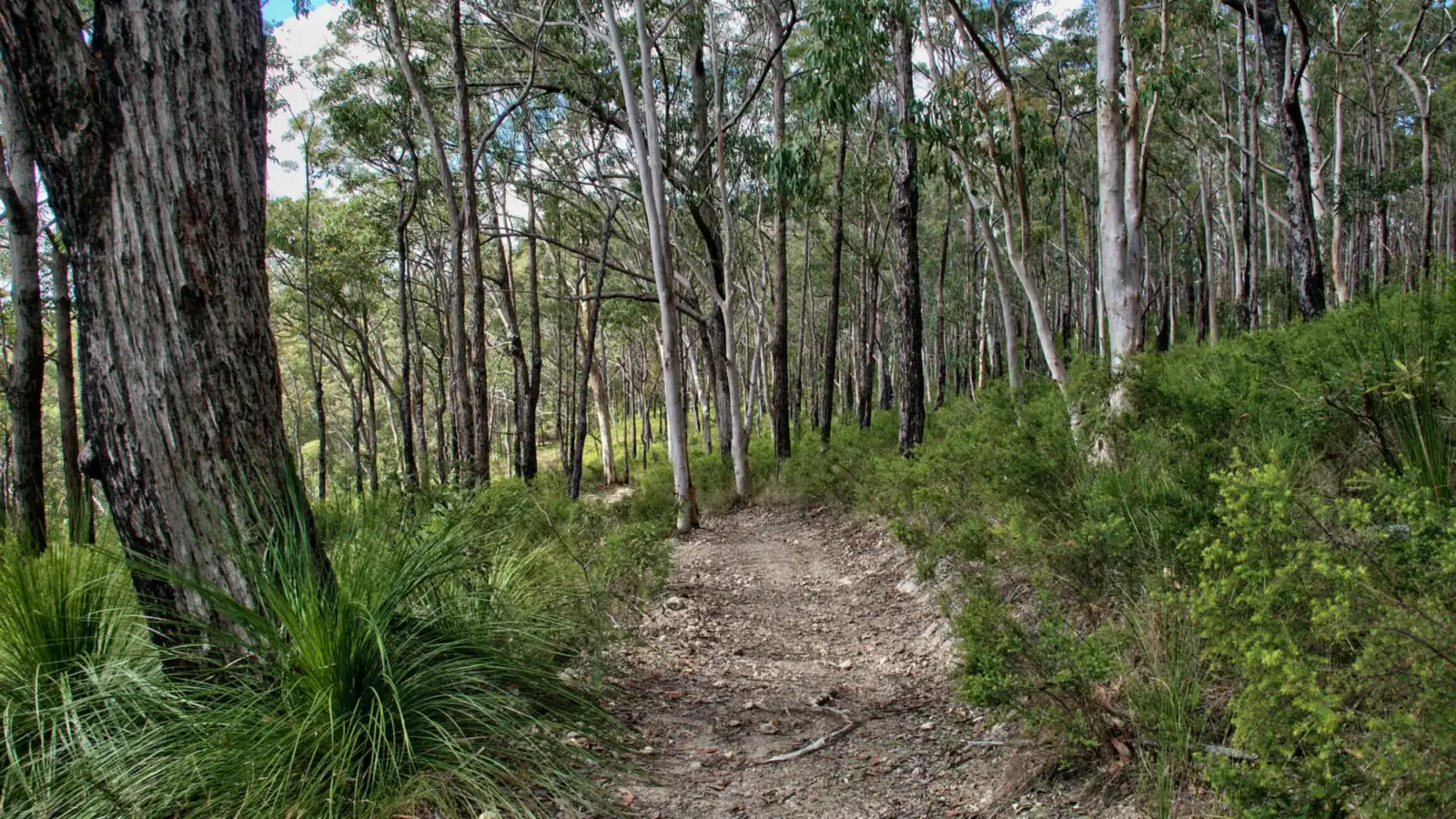
Photo: Somerset Trail, Mount Mee section of D'Aguilar National Park, by Tatters ❀ from Brisbane, Australia, CC BY-SA 2.0, via Wikimedia Commons. Cropped to 16:9.
Short answer: you can keep walking through a Queensland summer if you change when and where you walk. Go early in the morning or late in the afternoon, pick shaded rainforest or breezy coastal tracks, carry more water than you think you need, and protect yourself from the sun. Learn the warning signs of heat exhaustion and heatstroke, and turn back early. Heatstroke is a medical emergency: call triple zero (000).
This guide is general information, not medical advice. If you have a heart, kidney or other health condition, take regular medicines, are pregnant, or are walking with young children or older people, ask your GP how hot weather affects you before you head out.
Quick facts: walking in the heat
- Best time to walk: early morning or evening. Queensland Health advises avoiding strenuous exercise or physical work between 11 am and 3 pm if possible (How to keep cool and stay hydrated).
- Water: drink regularly through the day, even if you don't feel thirsty. Queensland Health suggests aiming for around 2 to 3 litres a day unless your healthcare provider has advised you to limit fluids, and you'll need more when you're walking and sweating.
- Sun: use sun protection whenever the UV Index is 3 or above, as UV at that level can damage your skin (Cancer Council: UV Index).
- Humidity matters: the risk of heat-related illness rises when high temperatures are combined with high humidity, and is greatest during heatwaves (Queensland Health).
- Emergency: confusion, slurred speech, poor coordination or collapse can mean heatstroke. Call 000. For non-urgent advice, call 13 HEALTH (13 43 25 84) in Queensland or healthdirect on 1800 022 222.
Why hot weather makes walking harder
Your body cools itself mainly by sweating. On a hot, humid day, sweat evaporates more slowly, so your core temperature can climb even at a gentle pace. A hill that feels easy in winter can feel like hard work in January.
healthdirect explains that heatstroke happens when your body overheats to above 40°C and can no longer cool itself down. It's the most severe type of heat-related illness, and it can cause organ damage or death. Milder problems such as dehydration, heat cramps and heat exhaustion usually come first, which is why it pays to stop at the early signs.
Heatwaves are the riskiest time. The Bureau of Meteorology defines a heatwave as three or more days in a row of unusually high maximum and minimum temperatures for that location. Warm nights mean your body gets less chance to recover. When a heatwave warning is out, swap your trail walk for a short, shaded or indoor walk.
Plan your walk around the heat
1. Check the forecast and park alerts first
The Queensland parks department's bushwalking safety tips put this first: check the weather and park alerts before you go, and delay your plans if there's extreme heat, severe thunderstorms or bushfire risk. Summer storms are common in south-east Queensland, so check again on the morning of your walk.
2. Start early and finish before the hottest part of the day
QPWS advises starting longer walks at cooler times of the day to avoid heat exhaustion, and not heading into the forest at all if the weather is extremely hot or you can see a fire. In the Glass House Mountains, for example, QPWS notes summer days can go above 35°C and recommends starting early to avoid the midday heat (Glass House Mountains: visiting safely). Aim to be back at the car by mid-morning on hot days.
3. Choose shade, height or a sea breeze
Exposed ridges, rocky summits and open heath get much hotter than rainforest. On hot days, pick:
- Rainforest walks. The Mary Cairncross rainforest walk at Maleny, the Curtis Falls track on Tamborine Mountain and the Kondalilla Falls circuit are mostly under a canopy.
- Higher ground. QPWS says Mount Nebo and Mount Glorious in D'Aguilar National Park are, on average, about 3 to 4°C cooler than Brisbane, so the Greenes Falls track at Maiala is a good summer option (D'Aguilar: visiting safely).
- Coastal headlands, early. The Burleigh Head National Park trail, the Noosa Headland coastal track and the Three Sisters walking track at Broken Head catch the sea breeze. They're still exposed in places, so go at sunrise.
Browse more options in our Sunshine Coast, Gold Coast and Brisbane walk hubs.
4. Go shorter and slower
Cut your usual distance, walk at a pace where you can still talk, and plan extra rest stops in the shade. Choose walks that suit the slowest person in your group. A 2 km rainforest loop at 6 am is a better summer workout than a 10 km ridge walk at noon.
5. Give your body time to adjust
The first hot days of the season are often the hardest. Research on athletes shows the body adapts to exercising in heat with repeated exposure: most changes (a lower heart rate, lower body temperature and a higher sweat rate) happen in the first week, and the full benefit takes up to about two weeks (Racinais et al., British Journal of Sports Medicine, 2015). For everyday walkers, the practical lesson is simple: build up gradually in early summer instead of tackling your longest walk on the first hot weekend.
What to carry on a hot-weather walk
- Water, and plenty of it. Many trailheads have no drinking water. In D'Aguilar National Park, for example, QPWS says safe drinking water is only available at Walkabout Creek Discovery Centre.
- Sun protection. Cancer Council's five SunSmart steps are: slip on clothing that covers your skin, slop on SPF 50+ broad-spectrum, water-resistant sunscreen, slap on a broad-brimmed hat, seek shade and slide on sunglasses. QPWS recommends sunscreen, a hat and a long-sleeved shirt even on cloudy days, and the parks department suggests putting sunscreen on at least 20 minutes before you start.
- Light, loose clothing in breathable fabric, and enclosed shoes.
- A charged phone, first-aid kit and insect repellent. Tell someone where you're going and when you'll be back.
- Snacks to replace energy on longer walks. Queensland Health notes that oral rehydration solutions can help replace fluids and body salts if needed.
Our hiking essentials checklist has the full packing list.
Know the warning signs
Queensland Health describes how heat-related illness can progress (Heat-related illness):
| Stage | Signs | What to do |
|---|---|---|
| Early heat-related illness | Heavy sweating, thirst, bright or dark urine, headache, dizziness or light-headedness, nausea, muscle cramps (usually in the legs or stomach), irritability, tiredness or weakness | Stop, rest in the shade, cool down and drink water. These symptoms often improve with rest, cooling and water |
| Heat exhaustion | Pale skin and profuse sweating, worsening tiredness or weakness, restlessness, fainting or feeling faint, fast weak pulse, rapid shallow breathing, nausea or vomiting, worsening headache and dizziness | Move somewhere cool, lie down and remove excess clothing. Put cool, wet cloths on the forehead, wrists, neck and underarms, and give small sips of cool water. Call 000 if the person becomes unconscious or starts vomiting |
| Heatstroke | Confusion, poor coordination or slurred speech, hot dry skin (possibly not sweating), fast shallow breaths, rapid pulse, extreme fatigue, headache, fainting, vomiting, loss of consciousness | Medical emergency: call 000 immediately. Move them somewhere cool if possible, lie them down, remove excess clothing, cool with wet cloths or fanning, and give small sips of fluid only if they're conscious and able to swallow |
If someone in your group starts to struggle, turn back together. Don't leave them alone on the track.
Keep moving when it's too hot outside
You don't have to stop being active over summer. Australia's physical activity guidelines recommend adults do moderate- to vigorous-intensity activity for 30 minutes or more on most days (health.gov.au). On the hottest days you can:
- split your walk into two short sessions, one at dawn and one after sunset
- walk in an air-conditioned shopping centre or on a treadmill
- join a group that meets early. Heart Foundation Walking lists free groups across Queensland, and our walking groups guide has more ideas
- count steps instead of kilometres for a while. See how many steps a day you really need.
With Active Quests you can pick a short, shaded trail, check in at GPS checkpoints and earn ACTIVE Coins for completing it, so a quick dawn loop still counts toward your goals.
Heading to tropical North Queensland? Start early and read our guide to Magnetic Island walks, or browse every trail on the Townsville & Magnetic Island walks hub.
Frequently asked questions
What is the best time to walk in hot weather?
Early morning is best, followed by late afternoon or evening. Queensland Health advises avoiding strenuous exercise between 11 am and 3 pm if possible, and QPWS recommends starting longer walks at cooler times of the day.
How much water should I take on a summer hike?
Take more than you expect to need, because many trailheads have no drinking water. Queensland Health suggests adults drink around 2 to 3 litres of water a day unless their doctor has advised otherwise; you'll need extra on top of that when you're walking and sweating in the heat. Sip regularly rather than waiting until you're thirsty.
Is it safe to walk in 35 degree heat?
It can be risky, especially when it's humid, during a heatwave, or on an exposed track. If you go, keep it short, walk very early, stay in the shade and carry plenty of water. QPWS advises against heading into parks when the weather is extremely hot.
What are the signs of heat exhaustion when hiking?
Early signs include heavy sweating, thirst, headache, dizziness, nausea, muscle cramps and tiredness. Queensland Health says heat exhaustion develops when these get worse: pale skin and profuse sweating, a fast weak pulse, rapid shallow breathing, vomiting or fainting. Stop, get somewhere cool, lie down, cool the skin and sip water.
When is heat illness an emergency?
Confusion, slurred speech, poor coordination, hot dry skin, collapse or loss of consciousness can mean heatstroke. Call triple zero (000) straight away and start cooling the person while you wait. Also call 000 if someone with heat exhaustion becomes unconscious or starts vomiting.
Should I wear long sleeves when walking in the heat?
Loose, lightweight long sleeves protect your skin from UV and can feel cooler than bare skin in strong sun. QPWS recommends sunscreen, a hat and a long-sleeved shirt even on cloudy days.
The bottom line
Walk early, walk in the shade, carry plenty of water, cover up from the sun, and stop at the first sign of trouble. Treat the hottest days as rest days or indoor days, and save your big walks for cooler mornings. Find a shaded trail quest near you, and read hiking for beginners and our 30-day walking challenge for more ways to keep moving. Active Quests is available on the App Store.
Sources
- Queensland Health: How to keep cool and stay hydrated
- Queensland Health: Heat-related illness and Heat-related illness: risk factors
- healthdirect: Heatstroke
- Bureau of Meteorology: What is a heatwave?
- Queensland Department of the Environment, Tourism, Science and Innovation: 10 must-know safety tips for bushwalking and hiking in Queensland
- Queensland Parks and Wildlife Service: Glass House Mountains National Park: visiting safely and D'Aguilar National Park: visiting safely
- Cancer Council Australia: UV Index and Five SunSmart steps
- Racinais S et al. Consensus recommendations on training and competing in the heat. British Journal of Sports Medicine 2015;49(18):1164–1173. doi:10.1136/bjsports-2015-094915
- Australian Government Department of Health, Disability and Ageing: Recommendations for adults (18 to 64 years)
- Heart Foundation Walking: Find a walking group in Queensland